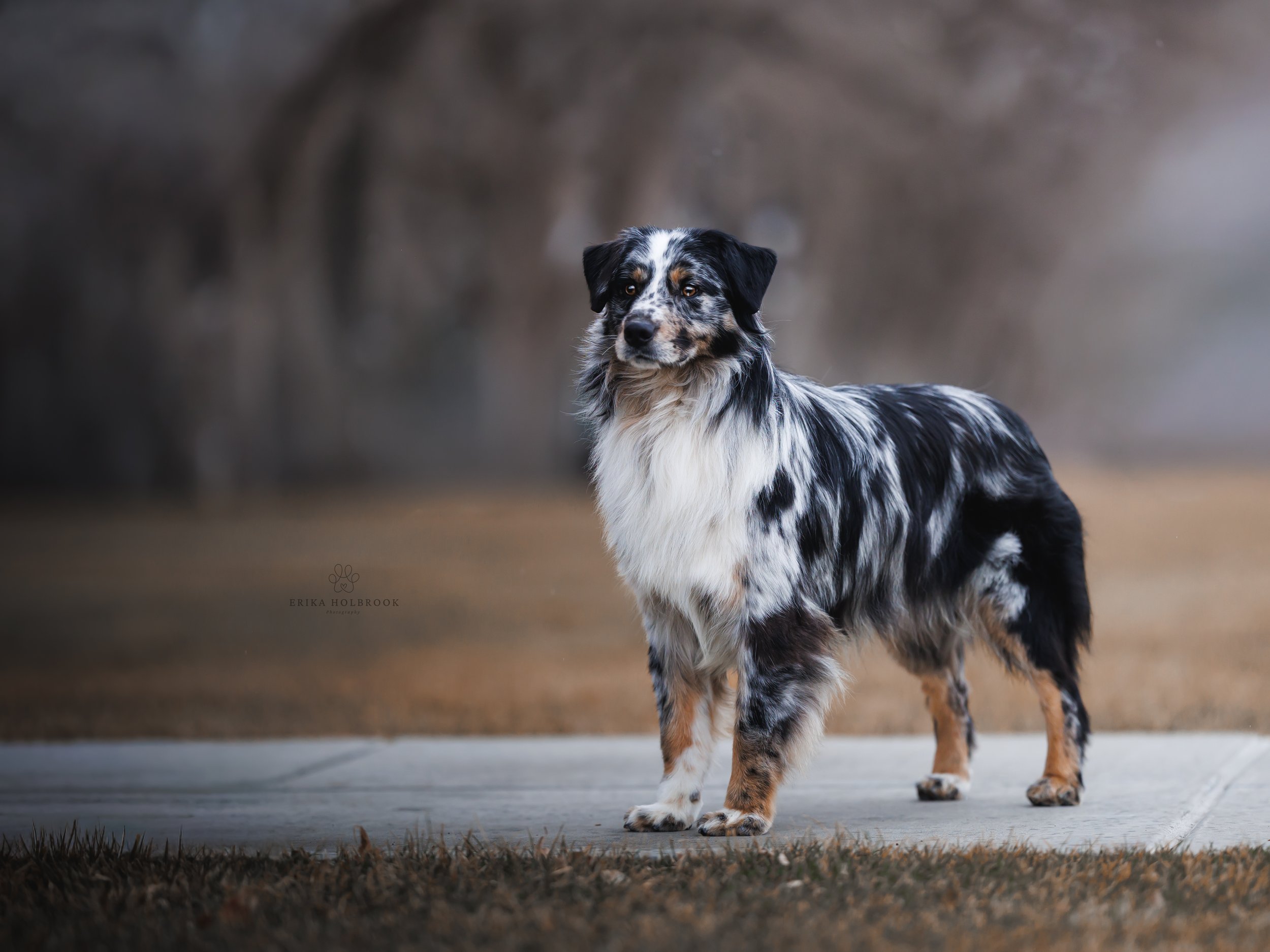
Mini American Shepherd | Mini Aussie
Mini Aussie and Toy Aussie are the names many families recognize when first searching for this breed. While these terms remain widely used, the official American Kennel Club (AKC) name for the breed is Miniature American Shepherd.
When the breed was accepted into the American Kennel Club and fully recognized in 2015, dogs previously registered in other registries as Miniature Australian Shepherds or Toy Australian Shepherds were entered into the AKC stud book under the name Miniature American Shepherd. Today, many people still refer to the breed as a Mini Aussie, while Miniature American Shepherd remains the official AKC breed name.
The Miniature American Shepherd developed from small Australian Shepherd–type dogs often seen traveling with rodeo participants and horse enthusiasts, along with intentionally bred smaller Australian Shepherd lines. These dogs share the same heritage, instincts, intelligence, and versatility that define the Australian Shepherd.
The breed entered the AKC Miscellaneous Class in May 2011 and received full recognition in 2015. At that time, a distinct name was required to separate the new stud book from the Australian Shepherd. In agreement with the AKC and the United States Australian Shepherd Association (USASA), the name Miniature American Shepherd was adopted. While this is the official AKC name, Mini Aussie remains the familiar nickname used by many owners and continues to appear in other registries and everyday conversation.
In our program, we are committed to preserving the intelligence, structure, and working ability that define the breed while honoring the depth and continuity of its Australian Shepherd pedigrees. Our focus is on producing sound, stable dogs with balanced structure and thoughtful temperaments, suitable for companion homes, performance venues, and the show ring alike.
Purpose & Working Heritage
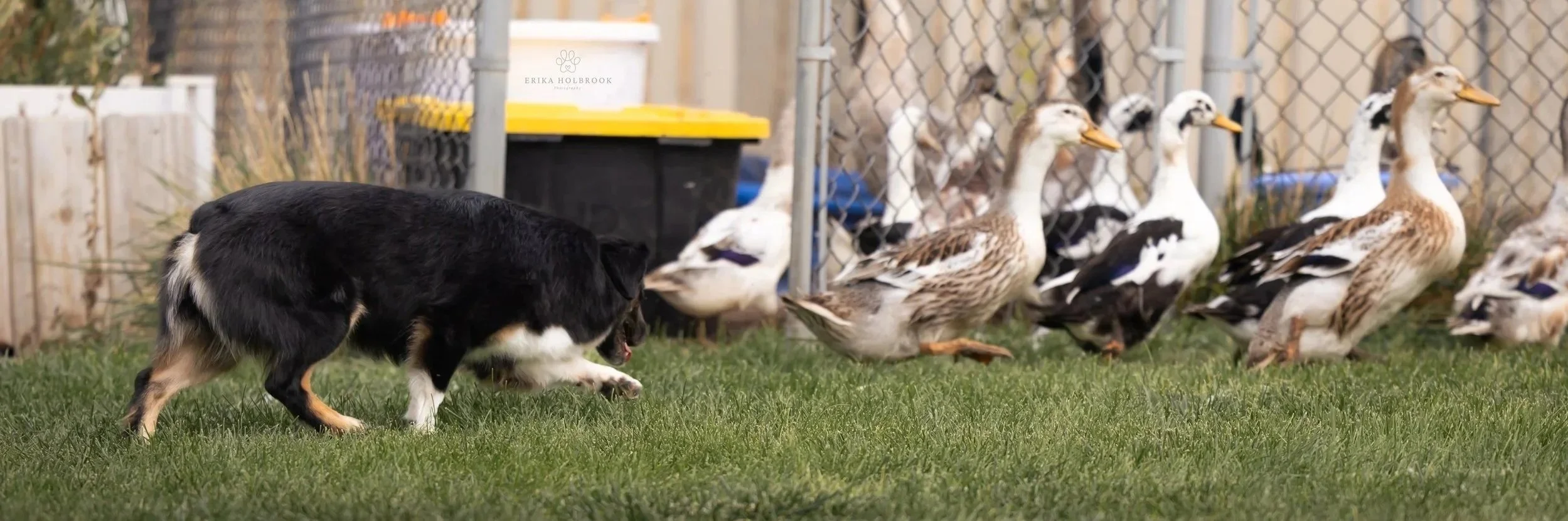
Myra, our Miniature American Shepherd, gently moving the ducks back to their pen. Proudly co-bred with Prestige Australian Shepherds.
The earliest small Australian Shepherd–type dogs that would eventually contribute to the Miniature American Shepherd began primarily as toy-sized rodeo companions. Valued for their intelligence, portability, and partnership with handlers, these smaller dogs traveled easily with equestrian enthusiasts and quickly gained popularity in those circles.
At the same time, there were naturally smaller Australian Shepherds within the broader Aussie population. It is important to remember that the Australian Shepherd itself had not yet been refined to the consistent type and size seen today. As interest in the smaller dogs grew, two streams of development began to take shape. Some breeders selectively bred down smaller Australian Shepherd lines. Others began with the toy-sized rodeo companions and introduced Australian Shepherds back into the breeding programs to increase size, enhance workability and grit, strengthen structure, and move closer to recognizable Australian Shepherd type.
During this period, the American Kennel Club was not involved with either breed, and various registries were used somewhat inconsistently. Some organizations favored size designations, while others preferred to maintain all size variations under a single Australian Shepherd identity.
Over time, the purpose of the smaller dog expanded. What may have originated largely as a companion rodeo dog developed into a capable small herding breed, valued not only for partnership but for instinct, versatility, and athleticism. Today, responsible breeders continue to preserve that balance of structure, temperament, and working ability while honoring the breed’s complex and shared heritage.
History & Registry Development
As these smaller Australian Shepherd–type dogs gained popularity, early preservation efforts began to take shape. One of the foundational figures in documenting and organizing these dogs was Sandy Travis, who began recording pedigrees and intentionally breeding toward greater consistency in size and type. Her work helped transition the dogs from loosely defined smaller Aussie types into a more structured and traceable population.
Over time, additional foundational breeders contributed to refining the dogs while maintaining their shared Australian Shepherd heritage, incorporating dogs registered as Australian Shepherds within their respective registries to strengthen type, structure, and working ability. As interest expanded, various registries were established to recognize and document pedigrees, often under the names Miniature Australian Shepherd or Toy Australian Shepherd, depending on size classification.
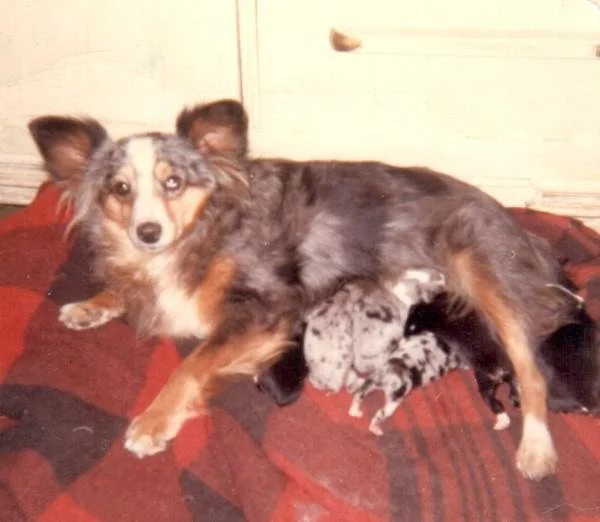
Travis’ Puppy
Today, in the United States, the American Kennel Club and the United Kennel Club recognize the breed as the Miniature American Shepherd. Other registries, including the American Stock Dog Registry and the Miniature Australian Shepherd Club of America, continue to use the Miniature Australian Shepherd or Toy Australian Shepherd names. Many dogs have historically held dual registration across registries, and AKC stud books have remained open to eligible dogs from these populations through January 1, 2025.
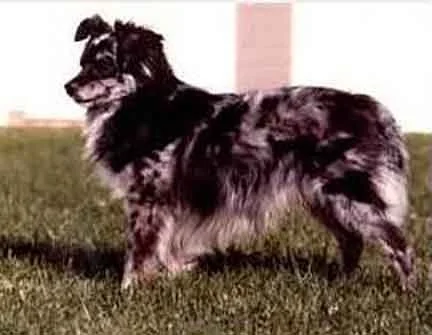
Travis’ Puppy grandson - Cordova’s Spike
The transition to the name Miniature American Shepherd occurred when the AKC accepted the breed into a separate stud book from the Australian Shepherd in 2015. As part of that recognition process, and in agreement with the AKC and the United States Australian Shepherd Association, a distinct name was required. The chosen name reflects formal AKC recognition while acknowledging the breed’s American development and shared heritage.
Today, responsible breeders focus less on registry divisions and more on preservation, maintaining sound structure, stable temperament, documented pedigrees, and appropriate health testing to ensure the breed’s long term strength and viability.
If you would like a deeper dive into the history of the breed names and registries, we have written a more detailed article exploring that story.
Breed Standard & Structure
At a Glance
• Height: 13–18 inches
• Build: Moderate bone, slightly longer than tall
• Movement: Smooth, balanced, ground-covering
• Coat: Moderate double coat
• Colors: Black, blue merle, red, red merle
The Miniature American Shepherd is a balanced, athletic, and proportionate herding breed. While smaller in size than the Australian Shepherd, the overall outline, substance, and movement should reflect the same principles of moderation, strength, and functional soundness.
The Miniature American Shepherd should resemble a smaller Australian Shepherd in overall character, balance, and proportion. Within the parameters of the standard, however, visible variation in type does exist across pedigrees and lines. Differences in head style, outline, coat density, and expression can all fall within correct type. Structure, proportion, and soundness remain more meaningful indicators of correct quality than strict resemblance to any single example or trend.
Size & Proportion
According to the AKC breed standard, the preferred height range in the show ring is 14 to 18 inches at the withers for males and 13 to 17 inches for females. These ranges provide a framework for maintaining consistent scale and balance within the breed.
The Miniature American Shepherd should present as slightly longer than tall, with moderate bone and balanced angulation front and rear. Proper proportion contributes to athletic efficiency, endurance, and long-term structural soundness.
Height is evaluated within the context of overall balance. A dog that measures within range but lacks proportion, substance, or correct movement does not exemplify correct type. Structure and soundness remain central to preserving the breed’s functional integrity.
Head & Expression
The head of the Miniature American Shepherd should be clean and in proportion to the body, reflecting overall balance rather than exaggeration. The crown is flat to slightly rounded, and the muzzle should be of medium width and depth, tapering gradually to a rounded tip without appearing heavy or overly fine. The length of muzzle and crown are equal, creating a balanced profile when viewed from the side.
Eyes are almond-shaped and set slightly obliquely, giving the breed its alert and intelligent expression. Eye color may be brown, blue, hazel, amber, or any combination thereof, including flecks or marbling. While some individuals may be reserved with strangers, the expression should remain attentive and thoughtful rather than timid.
Ears are triangular and moderate in size, set high on the head. When attentive, they should break forward and over or to the side as a rose ear. Ears that stand fully erect or hang without lift fall outside correct type.
The Miniature American Shepherd is not an extreme head breed. Variation within correct type is normal, and overall balance, proportion, and soundness carry more importance than emphasizing any single feature.
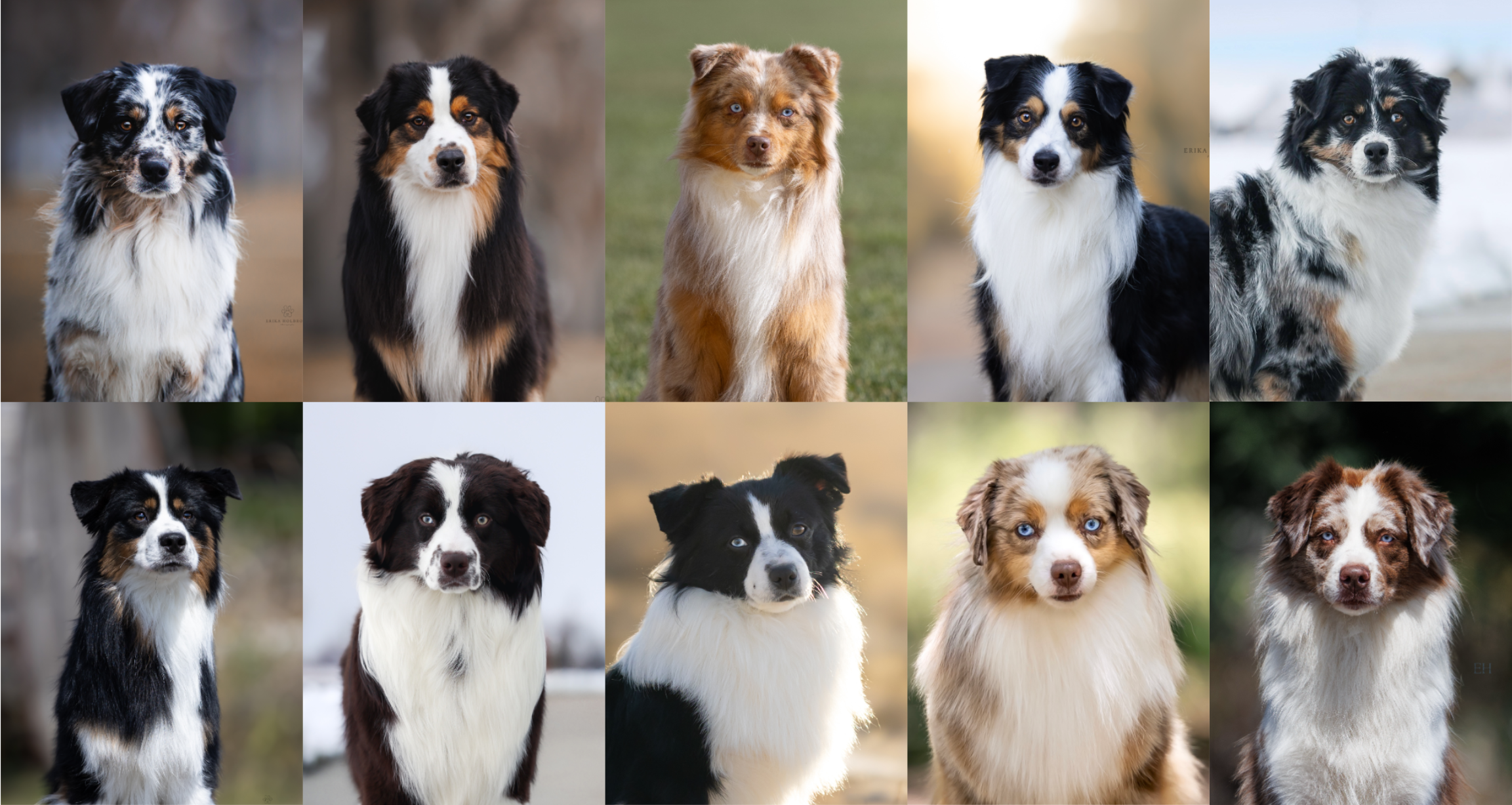
Examples of Male Miniature American Shepherd Head & Ear Type Within Breed Standard
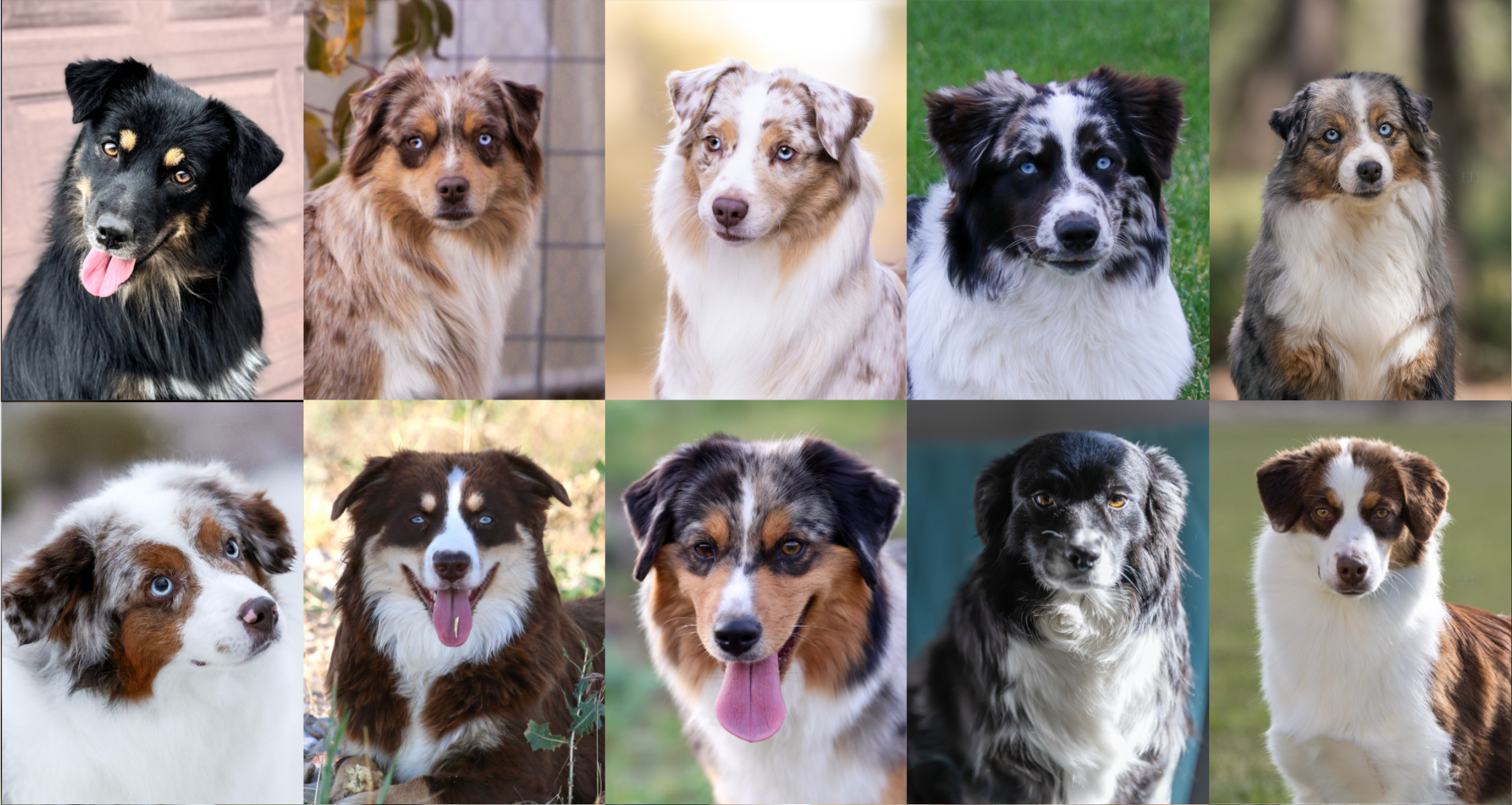
Examples of Female Miniature American Shepherd Head & Ear Type Within Breed Standard
Bone & Substance
The Miniature American Shepherd should be solidly built with moderate bone in proportion to body height and overall size. The overall impression should be one of strength and depth without heaviness. Bone should support durability and athletic movement, allowing the dog to work comfortably and efficiently.
Balance is important. A dog that is overly refined may lack the substance needed for endurance, while one that is too heavy or coarse can lose agility and ease of movement. The goal is moderation and functional structure rather than extremes.
The standard also recognizes natural differences between males and females. Males should appear masculine without being coarse, and females feminine without appearing slight or fragile. In both, substance should enhance balance and soundness rather than draw attention to itself.
Correct bone and substance contribute to the breed’s ability to remain capable, versatile, and resilient over time.
Movement
Sound movement is one of the clearest indicators of correct structure. The Miniature American Shepherd should move smoothly, freely, and with ease, showing balanced reach in the front and drive from the rear. The stride should be ground-covering without wasted motion, reflecting both efficiency and athleticism.
When viewed coming and going, the legs should move straight and parallel to the center line of the body. As speed increases, the feet naturally converge toward a center line of balance while the back remains firm and level. From the side, the dog should carry the head in a natural position, with the neck extended forward and the topline steady.
Proper angulation of the shoulders and hindquarters allows the dog to move fluidly and change direction with agility. Movement should never appear restricted, rolling, pounding, or overextended. Ease of motion is more important than exaggeration.
While movement is evaluated in the show ring, it is equally important in everyday life. Efficient structure reduces unnecessary strain on joints and supports long-term soundness, endurance, and comfort. A dog that moves correctly is more likely to remain capable and resilient over time.
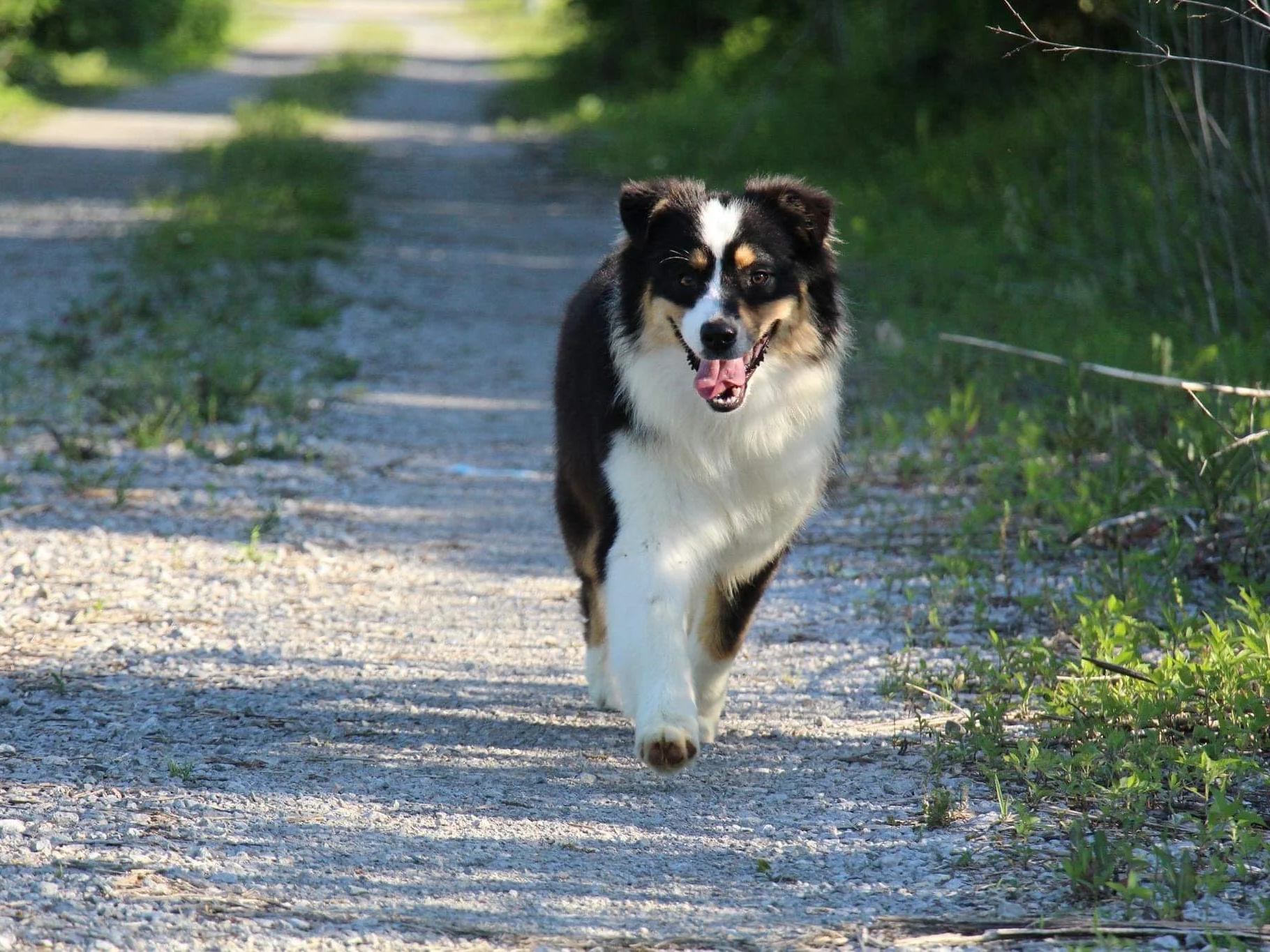
Front movement at speed, with natural convergence toward the center line. Owned by Prestige Australian Shepherds.

Smooth, balanced movement with efficient reach and drive and a steady top line.
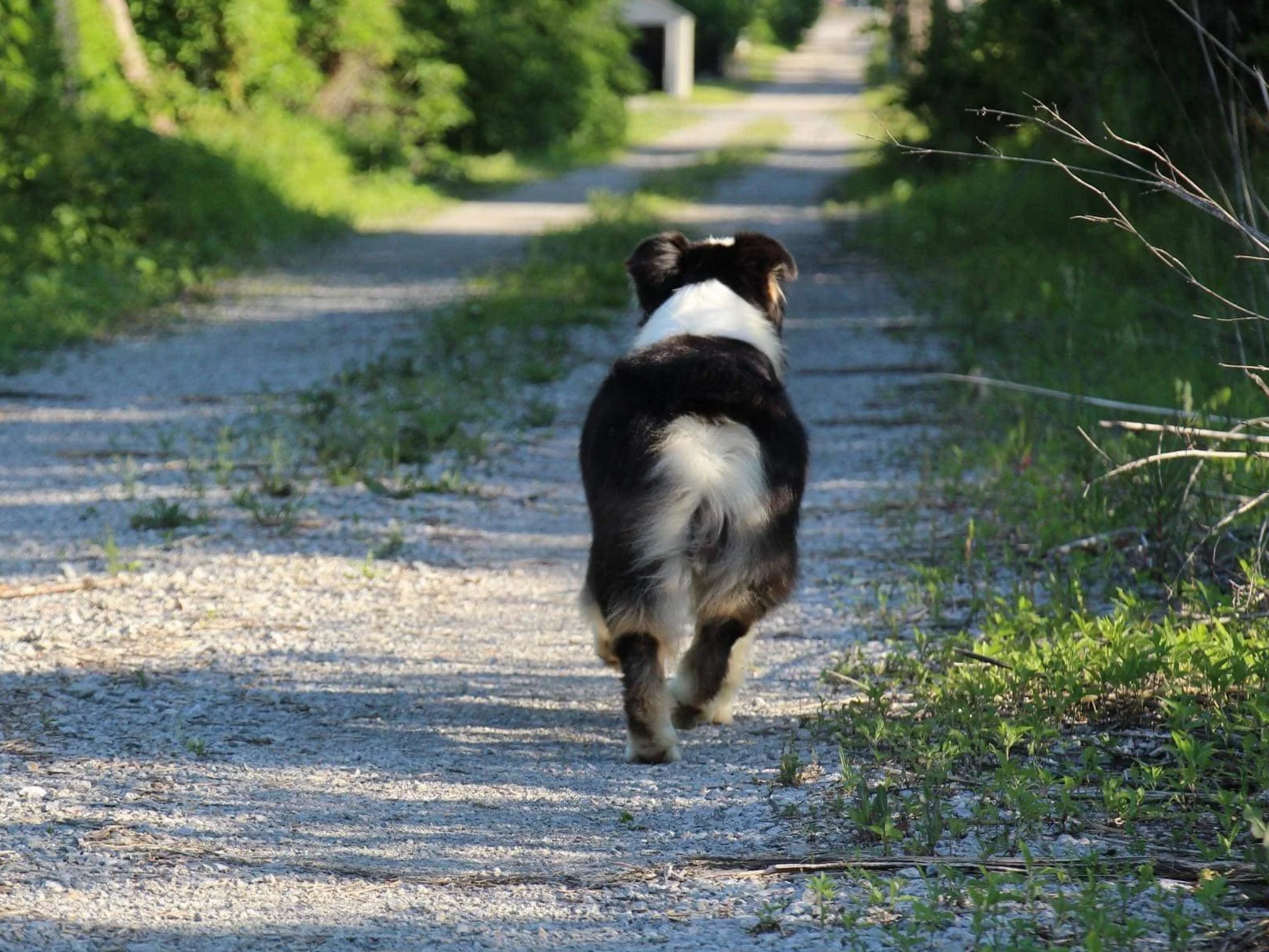
Moving away with steady drive and natural convergence toward the center line. Owned by Prestige Australian Shepherds.
Coat & Presentation
The Miniature American Shepherd carries a moderate double coat that protects from the elements while still allowing the dog’s natural outline to be seen. The outer coat is of medium texture and may be straight to slightly wavy, with an undercoat that varies in density depending on climate and season.
Hair is shorter and smoother on the head and front of the legs, with moderate feathering along the backs of the forelegs and breeches. A mane and frill are present, typically more noticeable in males than in females. Overall, the impression should be one of balance and moderation rather than excessive coat.
The breed is meant to be shown and maintained in a natural presentation. Light trimming of the ears, feet, and tail area is acceptable to maintain a neat appearance, but the coat should never be sculpted in a way that alters structure or disguises proportion. Coat should complement the dog’s balance and movement, not overwhelm it.
For a more detailed look at coat color patterns and the genetics behind them, you can explore our Australian Shepherd and Miniature American Shepherd coat color guide here.
Color
The Miniature American Shepherd comes in a variety of beautiful and distinctive colors. Recognized base colors are black and red (liver or brown), which may appear as solid or in merle patterns, including blue merle and red merle, with or without white and tan markings. The standard places no preference on any particular color.
Merle patterns can vary widely, and markings may be symmetrical or asymmetrical. This individuality is part of the breed’s charm. While color often draws initial attention, it does not determine overall quality. Sound structure, stable temperament, and correct type remain far more important than any particular color pattern.
Tail
The breed standard states that a docked or natural bobtail is preferred. A docked tail, when present, should not exceed three inches in length. A natural bobtail may vary in length, and a naturally undocked tail may hang in a slight curve at rest. When the dog is in motion or excited, the tail may be carried raised with the curve accentuated.
The wording of the standard allows for natural variation in both length and carriage. Both docked and natural tails are seen within the breed. As with many aspects of the standard, moderation and overall balance of the dog remain the guiding considerations.

Side view with natural undocked tail carried at rest.
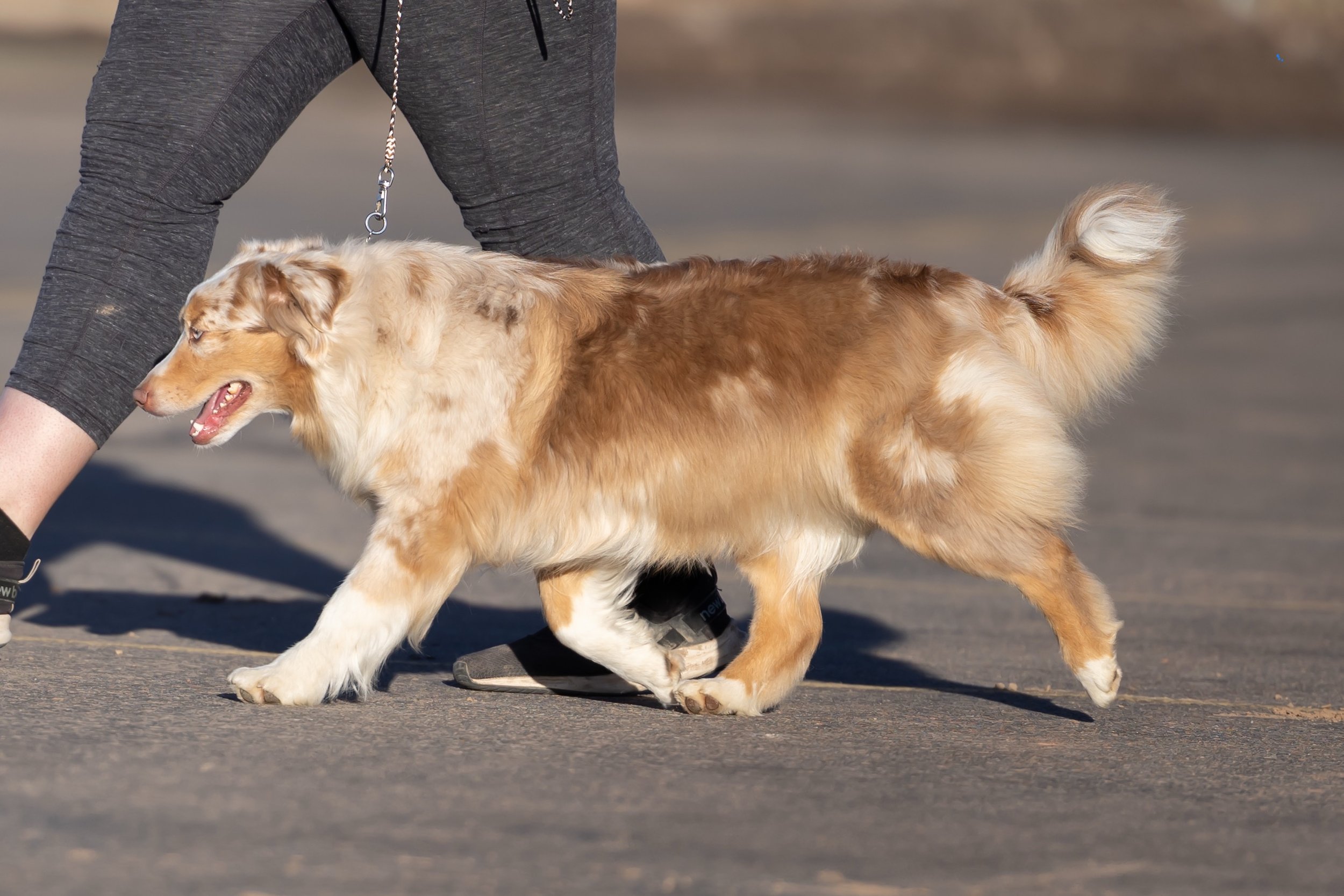
In motion, the tail may be carried raised with the curve accentuated.
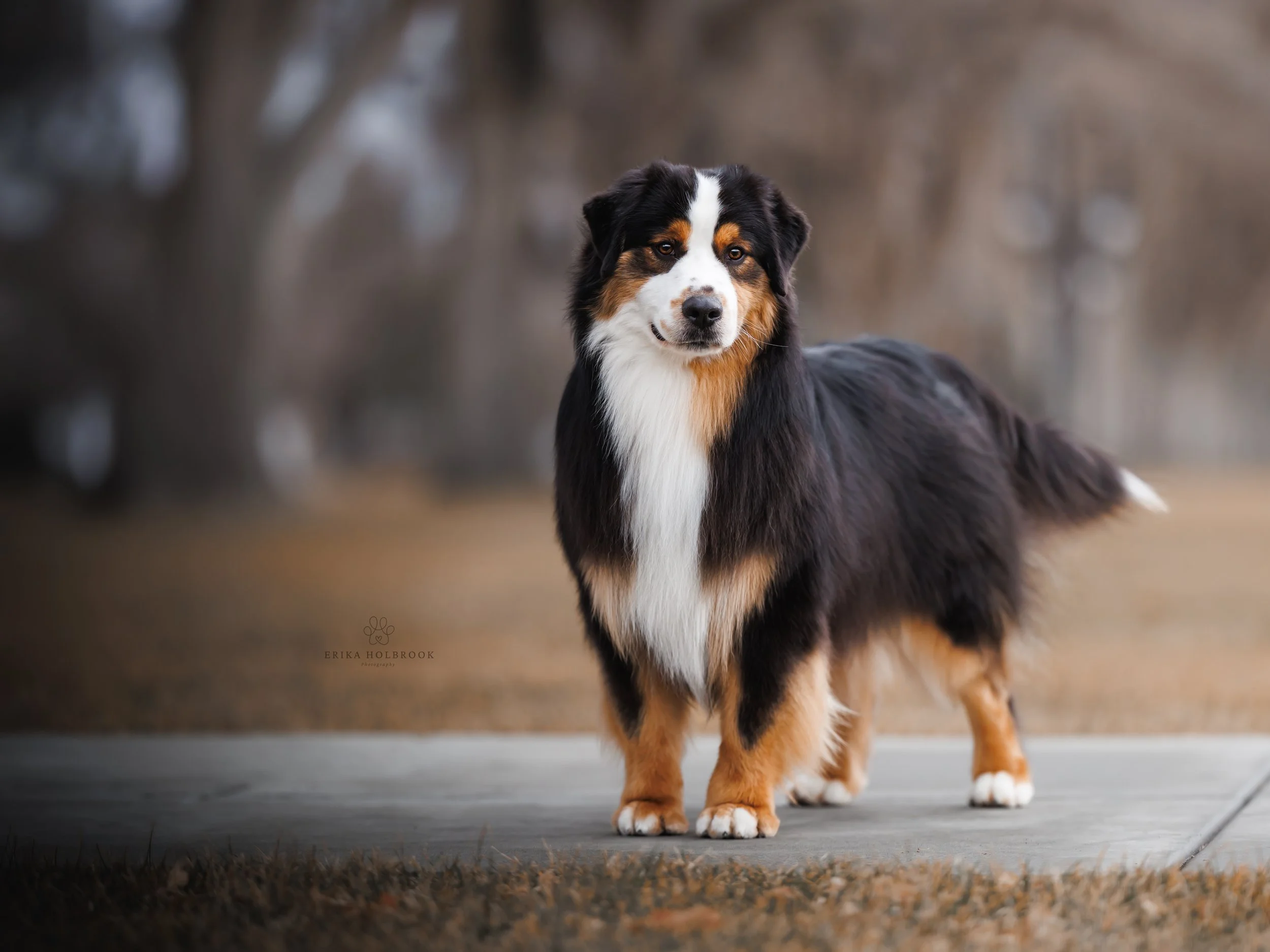
Tail raised naturally when alert.
The examples shown above reflect forms of tail carriage that are consistent with the breed standard. They are not the only expressions that may be considered correct. The standard uses the word “may” rather than “must” or “should,” allowing for a range of natural variation in both carriage and expression.
Individual breeders may describe their personal preferences when evaluating tail set and carriage, but preference and standard are not always identical. Historically, the language surrounding tail carriage was intentionally written with flexibility, recognizing that natural expression can vary while still remaining within correct type.
As with many aspects of the breed, moderation and overall balance remain more important than rigid interpretation of a single example.
Evaluation & Thoughtful Placement
The breed standard gives us a clear picture of what we are working toward, but living, breathing dogs are individuals. Within correct type, natural variation exists. Even thoughtfully planned pedigrees do not produce identical results, and not every well-bred puppy will grow into a show or breeding prospect.
Evaluation is an ongoing process. As puppies mature, we look at balance, movement, temperament, and overall consistency with the standard. Some will stand out as strong candidates for show or breeding homes. Others, while healthy and well-structured, may be better suited for companion or performance homes.
A puppy does not need to meet every detail of the standard to be an exceptional family member or athlete. Thoughtful placement means recognizing each dog’s strengths and matching them with the environment where they will thrive.
Preservation is a long-term commitment. Each generation builds on the last, with the goal of steady improvement while protecting health, soundness, and the character that defines the breed.
Temperament & Trainability
The Miniature American Shepherd is bright, engaged, and happiest when connected to their people. Bred to work alongside a handler, they naturally look to their person for direction and partnership. They tend to be attentive and quick to pick up on routines, expectations, and energy within the home.
With their families, Minis are loyal and involved. Many develop what owners affectionately call a “velcro” personality, choosing to stay close and participate in daily life rather than keeping their distance. While energy levels vary by individual and line, most thrive with regular activity and meaningful interaction to keep both mind and body satisfied.
Energy & Engagement
Drive levels in the Miniature American Shepherd can vary. Some individuals are lower key and content with moderate daily activity, while others carry higher drive and intensity, particularly in lines selected for performance or working ability. Understanding the influence of pedigree and the goals of the breeder helps set realistic expectations.

Many Minis are capable of a healthy “off switch.” They may rest quietly in the home and then readily shift into focus and enthusiasm when engaged in play, training, or work. This ability to toggle between calm and active is part of what makes the breed so versatile.
A simple walk may be sufficient for some individuals, while others benefit from more structured outlets. It is important, however, not to rely solely on physical exercise. Constantly increasing physical output can unintentionally build stamina and drive to a level that becomes difficult to satisfy. Mental engagement, problem-solving, training sessions, and even intentionally teaching calm behavior are equally important. A balanced approach supports both a steady temperament and a sustainable lifestyle.
When thoughtfully managed, the Miniature American Shepherd’s energy becomes an asset rather than a challenge. They thrive when given purpose, but they also benefit from learning how to settle and self-regulate at home.
Working Instinct & Awareness
As a herding breed, the Miniature American Shepherd often carries a natural awareness of movement and activity around them. Some show obvious interest in livestock, while others express that instinct in quieter ways, simply by being tuned in to what is happening in their environment.
You may notice sensitivity to motion, such as children running or other pets moving quickly. With early guidance and appropriate outlets, this instinct can be shaped in healthy and productive ways. When given direction, their attentiveness becomes one of their strengths.
The breed is also naturally observant. Many Minis will alert to unfamiliar sounds or visitors, not out of fear, but because they are paying attention. Correct temperament should be confident and steady. While some may take a moment to assess new situations, instability or excessive shyness is not consistent with the breed’s character.
That awareness and engagement are part of what make the Miniature American Shepherd such a responsive and capable companion.
Social, Reserved, and Everything In Between
The Miniature American Shepherd is often described as reserved with strangers, but in practice, temperament exists on a spectrum. Some individuals are naturally aloof and prefer to observe before engaging. Others are immediately social and will happily seek out attention from new people.
Much of this variation comes down to line, selection, and individual personality. Breeders who prioritize stability and confidence may still produce puppies with different social expressions. Neither end of the spectrum is automatically incorrect, provided the dog is confident, resilient, and not driven by fear.
Environment and leadership also play a significant role. Dogs who feel secure in their handler’s guidance tend to navigate new situations with greater confidence. Clear boundaries, thoughtful exposure, and steady leadership help shape how a puppy expresses its natural temperament.
When choosing a Miniature American Shepherd, it is important to consider the individual puppy in front of you. A more reserved puppy may thrive in a quieter home, while a highly social one may enjoy frequent interaction and activity. Matching temperament to lifestyle is just as important as matching structure or pedigree.
Ideal Homes & Roles
At Home with a Miniature American Shepherd
Life with a Miniature American Shepherd, often affectionately called a Mini Aussie, is usually full of connection. Most truly enjoy being close to their people. They are often affectionate and physical, happy to curl up beside you, lean against your legs, rest their head in your lap, or quietly sit on your feet while you move around the kitchen. Many love to cuddle and are wonderful family dogs.
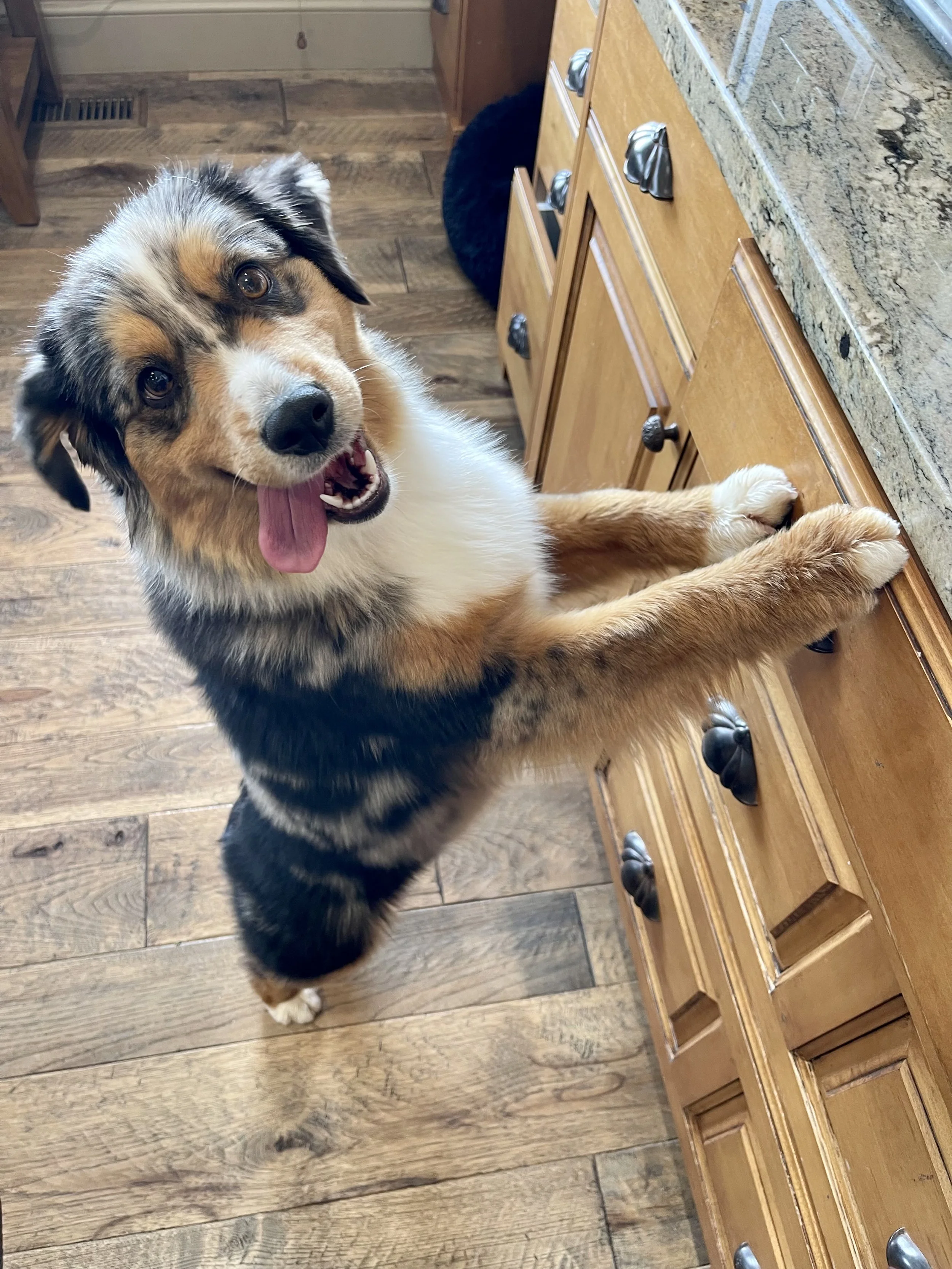
With thoughtful guidance, they can be excellent with children and may even be a first dog for a child who is ready to participate in training and care. Their desire to engage and be involved often makes them feel like an active part of the family rather than a dog who simply lives in the house.
While they can spend time in a yard or run when the family is busy, they are intelligent problem solvers. It is important that fencing is secure and truly dog-proof. A Mini is unlikely to roam simply for the sake of wandering, but they may absolutely find a way over, under, or through a weak spot if they believe it will get them closer to their people. They are not typically looking to escape. They are often looking to reconnect.
Training classes and shared activities are wonderful outlets for this breed. Many enjoy barn hunt, nose work, agility, hiking, camping, kayaking, or a simple game of fetch or frisbee in the yard. At the same time, when their needs are met, they are often content to rest quietly on slower days. A balanced Mini can hike all morning and then spend the afternoon stretched out beside you.
Their greatest strength at home is their ability to participate. They do not simply coexist. They engage, observe, follow, and attach. For the right household, that closeness is exactly what makes them so special.
Companion Homes
Many Minis thrive as devoted family companions. They do best in homes where they are included in daily life rather than treated as a backyard dog. While they can spend short periods of time in a secure yard or run when the family is busy, they are not a breed meant to live outside or be left alone for extended stretches as their primary lifestyle.
Families who enjoy interaction, routine, and shared activity often find them deeply rewarding. Whether it’s neighborhood walks, backyard play, training sessions, or simply being involved in household rhythms, they want to participate.
Performance & Active Homes
For those interested in training and sport, the breed offers tremendous potential. Agility, obedience, rally, barn hunt, nose work, hiking, and other activities allow them to use both mind and body. Higher-drive individuals especially benefit from structured outlets and clear goals.
Show, Sport, & Breeding Homes
Select individuals may be placed in show or preservation-minded homes. These placements require an understanding of structure, long-term development, and the responsibility that comes with representing the breed. Not every well-bred puppy will be suited for this path, and thoughtful evaluation guides those decisions.
Not the Best Fit For
This breed may not be ideal for households seeking a completely independent or low-engagement dog. Long periods of isolation, inconsistent boundaries, or minimal interaction can lead to frustration in an intelligent and people-oriented breed. They do not need constant activity, but they do need connection and clarity.
When matched thoughtfully, the Miniature American Shepherd adapts beautifully. The key is not finding a perfect dog, but finding the right fit between dog and home.
Health Testing & Longevity
Health & Genetics
The long-term health of the Miniature American Shepherd, often called the Mini Aussie, is an important responsibility shared by breeders and owners alike. Like all breeds, Miniature American Shepherds can have certain health conditions present within the population. Responsible breeding programs use available health screening and genetic testing to better understand potential risks and make thoughtful breeding decisions.
Organizations such as the Miniature American Shepherd Club of the USA (MASCUSA) and the American Kennel Club (AKC) provide guidance on recommended health testing and ongoing research within the breed.
Health testing does not guarantee that a dog will never experience health concerns, but it allows breeders to make more informed decisions and reduce risk over time. Through careful selection, transparency, and continued education, responsible breeders work to support the long-term health and stability of the Miniature American Shepherd.
Core Health Screening
The Mini Australian Shepherd or Miniature American Shepherd is generally a hardy and capable breed, but responsible preservation requires thoughtful health screening. The Miniature American Shepherd Club of the USA (MASCUSA) provides clear guidelines for required testing, helping breeders make informed and ethical pairing decisions.
Current parent club recommendations include:
• Hip Dysplasia Evaluation (OFA, PennHIP, or similar radiographic evaluation)
• Annual ACVO eye examination performed by a board-certified veterinary ophthalmologist
• DNA testing for PRA-PRCD
• DNA testing for Multiple Drug Sensitivity (MDR1)
• DNA testing for HSF4 (Hereditary Cataracts)
• DNA testing for NAD (Neuroaxonal Dystrophy)
Additional evaluations and genetic screenings are available and may be utilized depending on breeding goals and pedigree considerations.
Health testing does not guarantee perfection, but it significantly reduces preventable risk and supports long-term breed health. Structural soundness, stable temperament, and genetic diversity all play a role in longevity and overall well-being.
Well-bred Miniature American Shepherds commonly live into their early to mid-teens when supported by appropriate nutrition, exercise, and preventive veterinary care.
For a more detailed explanation of each recommended test, inheritance patterns, and how genetic diversity is considered in responsible breeding programs, please visit our Miniature American Shepherd health testing and genetics page.
Transparency & Documentation
Transparency is an important part of responsible breeding. Health testing results for our Mini Aussies or Miniature American Shepherds are made publicly available through the Orthopedic Foundation for Animals (OFA) database and are also shared on our website. This allows prospective owners and fellow breeders to review health information directly.
Health testing recommendations and available genetic tests for the Miniature American Shepherd continue to evolve as research advances. Responsible breeders stay attentive to new developments and adjust breeding decisions as our understanding of canine health continues to grow.
Lifespan
Average lifespan: 12–15 years
The Miniature American Shepherd, often called the Mini Aussie, is generally a healthy and long-lived breed. Most Miniature American Shepherds live 12 to 15 years, with many remaining active and engaged well into their senior years.
Longevity in this breed is influenced by both genetics and daily care. Responsible breeders prioritize health testing and thoughtful breeding decisions to reduce the risk of inherited conditions. Screening for orthopedic health, eye health, and known genetic concerns helps support stronger foundations for future generations.
Daily lifestyle also plays an important role. Maintaining a healthy weight, providing regular exercise and mental stimulation, and establishing consistent veterinary care all contribute to long-term health and quality of life.
Like all breeds, Miniature American Shepherds can be predisposed to certain inherited conditions. Responsible breeders work to reduce these risks through health testing and careful pedigree selection. Prospective owners should look for breeders who openly share health testing results and prioritize the long-term well-being of the breed.
At Painted Blue Aussies, health and longevity are central to our program. We carefully evaluate structure, temperament, and health testing results when planning breedings, with the goal of producing dogs that are not only beautiful and capable, but also able to live long, healthy lives as beloved companions.
Every Miniature American Shepherd we raise carries a unique mix of structure, temperament, and personality. This page is meant to provide a realistic, balanced understanding of the breed’s standard, instincts, and daily life. We are always happy to answer questions and help you determine whether a Mini is the right fit for your home.